

Butterfly Valves
Butterfly Valve Solutions for Industrial Pipeline Systems
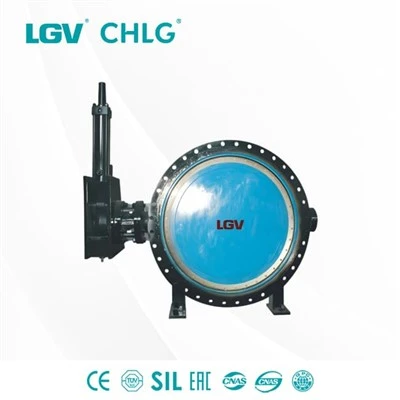
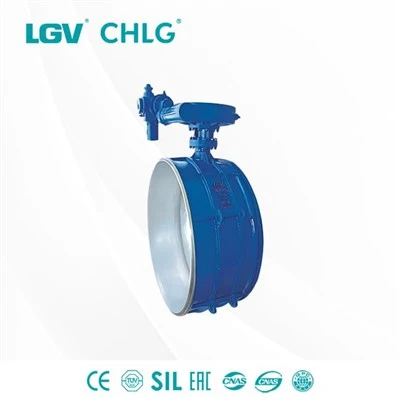
As a butterfly valve manufacturer, Lianggu offers eight industrial butterfly valve configurations covering triple eccentric metal-seated, double offset performance, wafer, flanged stainless steel, pneumatic actuated, electric actuated, hydraulic quick-closing, and butt welded designs. This range gives industrial valve distributors, engineering contractors, and project buyers different structural, connection, and actuation options within one product category.


Butterfly Valve Types and Selection Options
| Butterfly Valve Type | Main Configuration | Key Selection Considerations |
|---|---|---|
| Triple Eccentric Metal-Seated Butterfly Valve | Three-offset design with metal seating | Offset geometry, seat torque, sealing direction, and leakage requirements |
| Double Offset Performance Butterfly Valve | Double-offset disc motion | Flange compatibility, operating cycles, shaft bearing load, and seat material |
| Wafer Type Butterfly Valve | Compact body installed between pipeline flanges | Liner material, disc corrosion resistance, alignment, and flange standard |
| Flanged Stainless Steel Butterfly Valve | Stainless steel construction with integral flanged ends | Flange drilling, face-to-face dimensions, corrosion conditions, and seat retention |
| Pneumatic Actuated Butterfly Valve | Pneumatic quarter-turn actuator | Air supply pressure, spring-return or double-acting mode, and position feedback |
| Electric Actuated Butterfly Valve | Electric actuator for remote positioning and open-close control | On-off or modulating duty, power supply, travel time, and manual override |
| Hydraulic Quick-Closing Butterfly Valve | Hydraulic stored-energy actuation with controlled damping | Accumulator capacity, trip logic, closing curve, and water-hammer limits |
| Butt Welded Butterfly Valve | Welded-end construction | Weld-end metallurgy, post-weld treatment, and seat protection during welding |
Actuation and Pipeline Connection
The product range includes wafer, flanged, and butt-welded connection configurations, as well as pneumatic, electric, and hydraulic actuation.
For automated installations, the pneumatic butterfly valve requires confirmation of air supply conditions and actuator operating mode. Electric actuated models require agreement on power supply and whether the duty is on-off or modulating. Hydraulic quick-closing models require particular attention to the accumulator arrangement, trip logic, and controlled closing characteristics.
For welded pipeline installations, the butt welded butterfly valve requires confirmation of weld-end material and post-weld treatment. Wafer and flanged designs should be matched to the pipeline flange standard and installation dimensions.
Manufacturing and Quality Support
Lianggu Valve Group integrates valve design, R&D, manufacturing, and sales. Its manufacturing network includes ten production bases, with more than 400 CNC/NC machine tools and machining centers, automated horizontal machining equipment, large gantry vertical lathes, automatic welding machines, and assembly production lines.
The company's inspection resources include RT, UT, MT, PT, and spectrometer inspection, together with hydrostatic, pneumatic, cryogenic, high-temperature, and fugitive-emission testing equipment. Inspection methods and acceptance requirements can be identified according to the applicable product and project scope.
With more than 1,000 employees and nearly 200 R&D and technical professionals, Lianggu supports industrial valve projects across oil and gas, petrochemical processing, power generation, chemical processing, municipal water, metallurgy, and other sectors.
Request a Butterfly Valve Specification Review
Send us your required valve type, pipeline size, pressure rating, operating temperature, medium, connection type, material requirements, and actuation method. For automated or quick-closing configurations, include the available control and operating requirements.
Lianggu can review the specified butterfly valve configuration and discuss the corresponding technical datasheet, drawings, and inspection requirements for your project.