

Date:2026-06-10 Views:28
The first mistake people make when specifying a cast iron gate valve with flanged ends is assuming that a Class 150 designation means the same thing it does on a steel valve. It does not — and the cost of getting that wrong can range from nuisance leakage to a catastrophic brittle fracture. Pressure class for cast iron valves follows a different numbering system, a different standard, and a different set of temperature-derating rules than the steel valve classes that many engineers work with more frequently. Getting the selection right means understanding what those differences are and why they exist.
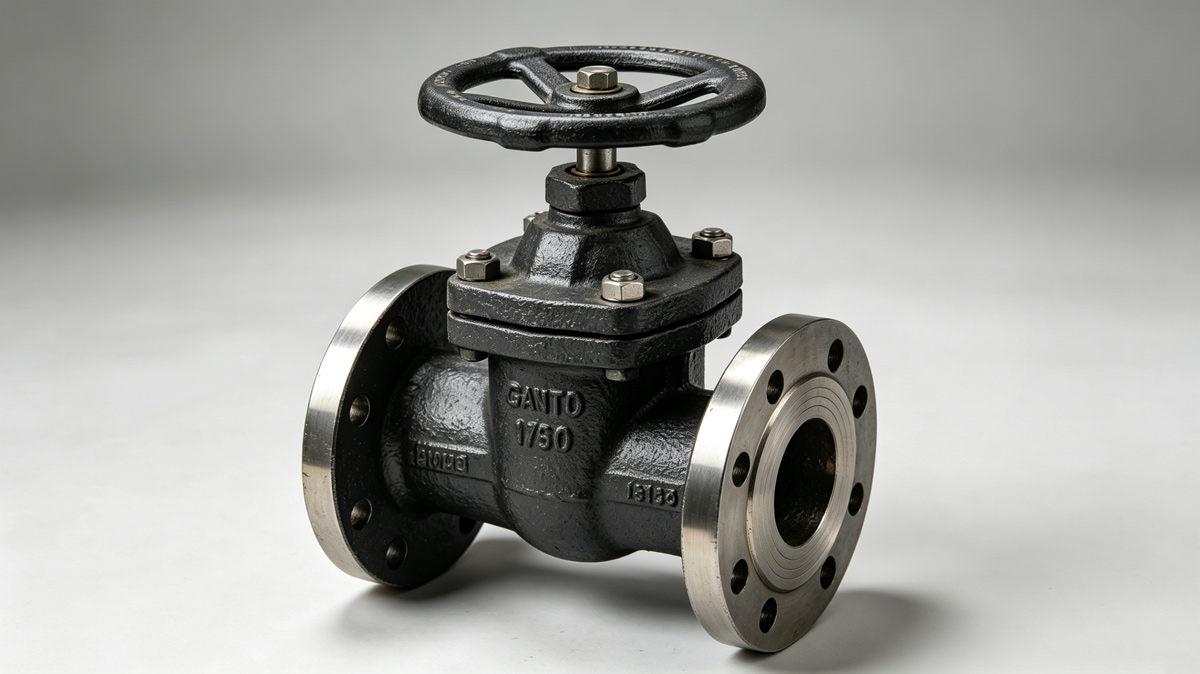
Cast iron gate valves with flanged connections are designed and manufactured under two principal standards. The valve itself is covered by MSS SP-70, a standard practice published by the Manufacturers Standardization Society that defines dimensions, materials, pressure-temperature ratings, and testing requirements for gray iron gate valves with flanged or threaded ends. The flange dimensions and bolt patterns follow ASME B16.1, which covers gray iron pipe flanges and flanged fittings in Classes 25, 125, and 250.
The body material is almost universally ASTM A126 Class B gray iron — a material chosen for its castability, machinability, and adequate strength for general industrial service. Unlike ductile iron (governed by ASTM A395 or A536), gray iron has relatively low tensile strength and negligible ductility. It fractures rather than deforms under overload. This material characteristic is not a design flaw — it is why the pressure rating system for cast iron is built around the assumption of non-shock service with generous safety margins.
A cast iron gate valve flanged to the pipeline must be matched not only to the correct flange drilling but also to the correct pressure-temperature envelope. The bolt pattern on an ASME B16.1 Class 125 flange is not the same as that on an ASME B16.5 Class 150 steel flange, and the two are not interchangeable without an adapter. Installing a Class 125 cast iron valve between Class 150 steel flanges by forcing a bolt pattern mismatch is a field error that appears regularly in plant audits — and it is one that can put the cast iron body under bending stress for which it was never designed.
How the Pressure Class Numbers Actually WorkThe class number stamped on a cast iron valve body — 125 or 250 — is its rated pressure in pounds per square inch at a specific reference temperature. For ASME B16.1 Class 125, that reference temperature is 353°F, which corresponds to the saturation temperature of steam at 125 psig. For Class 250, the reference temperature is approximately 406°F, the saturation temperature of steam at 250 psig.
This reference-point definition is fundamentally different from the ASME B16.34 class system used for steel valves, where Class 150, 300, and 600 numbers are designations rather than direct pressure limits at any single temperature. A Class 150 steel valve is not limited to 150 psi — it can handle 285 psi at ambient temperature in carbon steel. A Class 125 cast iron valve genuinely carries a 125 psi rating at 353°F — but at colder temperatures, its allowable working pressure is higher, not lower.
The pressure-temperature derating tables in ASME B16.1 show this clearly. For ASTM A126 Class B gray iron in sizes NPS 1 through 12:
| Temperature | Class 125 | Class 250 |
|---|---|---|
| -20°F to 150°F | 200 psig | 500 psig |
| 300°F | 165 psig | 375 psig |
| 350°F | 150 psig | 335 psig |
| 400°F | 140 psig | 290 psig |
| 450°F | 125 psig | 250 psig |
For sizes NPS 14 through 24, the allowable pressures are lower across the board. A Class 125 valve in this size range drops to 150 psig at ambient temperature and 100 psig at 350°F. A Class 250 valve in the same range drops to 300 psig at ambient and 220 psig at 350°F. Above NPS 24, availability becomes limited and the pressure ratings decline further, with Class 125 effectively unavailable above 300°F for the largest diameters.
The size dependency matters because it means that a Class 125 cast iron gate valve flanged in a 16-inch line has a fundamentally different pressure capacity than the same class in a 6-inch line, even at the same temperature. An engineer who specifies by class alone — without checking the size-specific entry in the ASME B16.1 table — may inadvertently select a valve that operates outside its rated envelope.
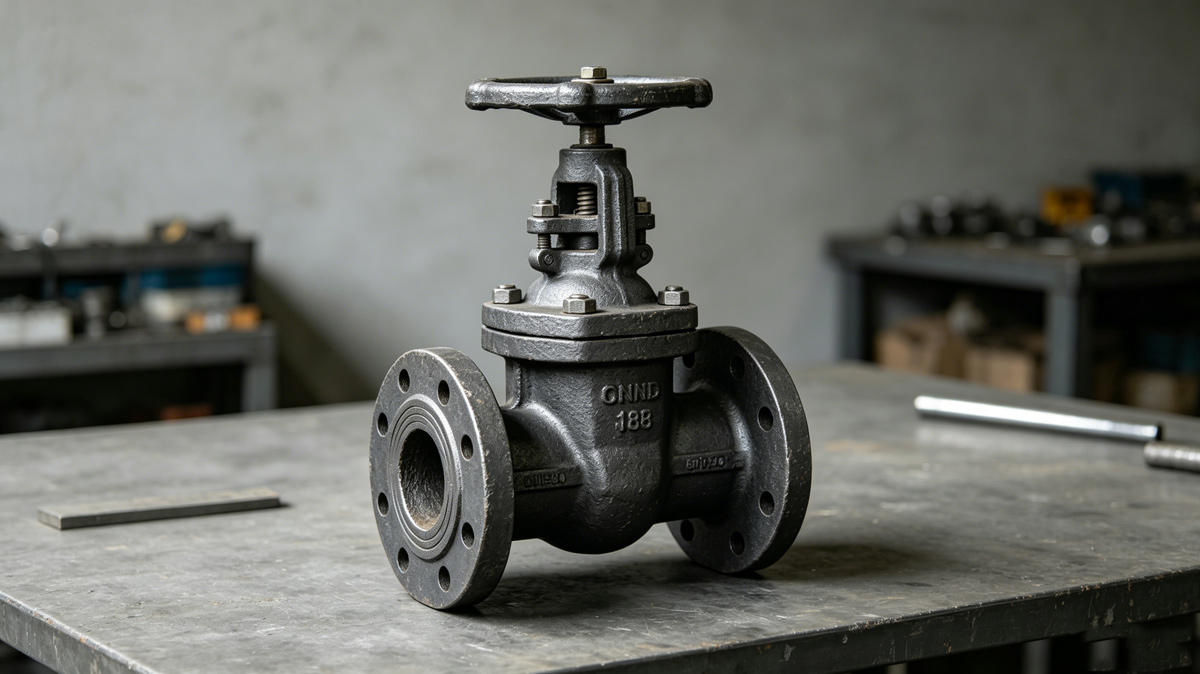
In municipal water distribution, building services, and HVAC chilled water systems, cast iron gate valves are routinely operated at pressures above their nominal class rating — and this is entirely permissible under the standard. A Class 125 valve in cold water service (below 150°F) in sizes up to 12 inches carries a 200 psig rating, and a Class 250 valve in the same conditions carries a 500 psig rating. These numbers are well above what the class designation suggests to someone unfamiliar with the standard.
The trap lies in assuming that a Class 125 valve is always good for 200 psig. As soon as the service temperature crosses 150°F, the rating begins to decline. By 250°F, the allowable pressure has dropped to 175 psig for sizes up to 12 inches. By 300°F, it is 165 psig. These are not dramatic reductions, but in a system where the operating pressure is close to the cold-water rating, a modest temperature excursion can push the valve beyond its ASME B16.1 limit.
This temperature sensitivity is why cast iron valves are generally not specified for saturated steam service above 15 psig without careful review of the pressure-temperature table. Low-pressure steam systems operating at 15 psig saturated steam (approximately 250°F) can use Class 125 cast iron valves in smaller sizes, but a 125 psig steam system at 353°F would push a Class 125 valve to its absolute rated limit — leaving zero margin for pressure surges, water hammer, or temperature excursions.
When Cast Iron Is the Right Choice — and When It Is NotThe material limitations of gray iron define the application envelope as much as the pressure class does. Gray iron is brittle. It has a tensile strength in the range of 20,000 to 30,000 psi, compared to 60,000 to 70,000 psi for carbon steel, and its elongation at fracture is effectively zero. This means it cannot absorb the energy of a water hammer event or a thermal shock by deforming — it cracks.
For this reason, cast iron gate valves are restricted to non-shock service. They are widely and successfully used in water treatment plants, cooling water systems, low-pressure steam, compressed air, and non-critical chemical lines where the fluid is not flammable, not toxic at low concentrations, and not subject to pressure transients. They are also common in building services — chilled water, condenser water, domestic water isolation — where operating pressures are moderate and temperatures are well within the cast iron range.
Where they are not appropriate is equally important to understand. Cast iron gate valves should not be used in hydrocarbon service, in any application where a valve failure could release flammable or toxic material, or in systems where water hammer is a known risk. The petroleum and chemical process industries generally prohibit cast iron valves in process piping for these reasons, as reflected in the scope of ASME B31.3, which restricts the use of gray iron to specific non-hazardous services and imposes additional thickness and pressure limitations beyond those of ASME B16.1.
A cast iron gate valve flanged in a fire water system illustrates the dilemma well. The valve sees cold water at moderate pressure — conditions under which a Class 250 cast iron valve is technically rated. But if the valve is exposed to fire, the thermal shock of cold water hitting a body heated by flame can cause instantaneous fracture. For this reason, many fire protection standards and authority-having jurisdictions require ductile iron or steel valves in fire water service, regardless of pressure class.
The Flange Connection: Drilling, Gaskets, and Bolt-UpThe flanged connection on a cast iron gate valve follows ASME B16.1, which uses a flat face flange design. This is different from the raised face flange common in ASME B16.5 steel piping. The flat face is intentional — it spreads the bolt load across the full face area rather than concentrating it on a raised ring, which would risk cracking the cast iron flange under bolt-up stress.
The gasket used with a cast iron flat face flange must cover the full face area. Using a ring-type gasket designed for raised face flanges on a flat face cast iron flange creates an unsupported annulus between the gasket inner diameter and the flange bore, concentrating bending stress at the flange root. This is another common field error that can go undetected until the flange cracks during hydrostatic testing or, worse, during service.
The bolting torque for cast iron flanges is also lower than for steel flanges of comparable size and bolt count. Over-torquing can crack the flange, and because gray iron provides no visible deformation before failure, there is no warning. Torque values should be obtained from the valve manufacturer or from standard bolting tables specific to ASME B16.1 flange assemblies, not from generic steel flange torque charts.
Wedge Type, Stem Design, and Other Selection FactorsBeyond the pressure class, the internal configuration of a cast iron gate valve flanged affects its suitability for a given service. The gate — the moving element that opens and closes the flow path — is typically a solid wedge in cast iron valves, though flexible wedge and split wedge designs exist for applications where thermal expansion of the wedge could cause binding against the seats.
The stem design is another selection variable. Outside screw and yoke, or OS&Y, designs have the stem threads above the bonnet and outside the pressure boundary. This keeps the threads out of contact with the process fluid — important in water and wastewater service where debris in the fluid can abrade the threads. Non-rising stem designs keep the stem entirely within the valve body and are preferred where vertical clearance above the valve is limited, such as in valve pits and below-grade installations, though the stem threads are exposed to the process fluid.
Seat construction in cast iron gate valves is typically integral — the seat surface is machined directly into the cast iron body — or renewable, where a separate seat ring is threaded or pressed into the body. Integral seats are standard for general service; renewable seats allow seat replacement without replacing the entire valve body and are preferred in services where seat erosion or corrosion is expected.
Bonnet construction is almost universally bolted for flanged-end cast iron gate valves. The bonnet gasket, typically a compressed fibre or graphite-based material, must be compatible with the service fluid and rated for the full pressure-temperature range of the valve. For steam service, graphite-based gaskets are standard because they maintain sealing performance at elevated temperatures where fibre gaskets would degrade.
Making the Selection: A Practical ChecklistIf you are selecting a cast iron gate valve flanged for a new installation or replacement, the following sequence will catch most errors before they become field problems.
First, determine the maximum operating pressure and the maximum operating temperature the valve will see — not the design conditions of the system but the actual worst-case combination that can occur during startup, normal operation, shutdown, and any foreseeable upset. Then consult the ASME B16.1 pressure-temperature table for the candidate pressure class and valve size. If the operating point falls below the table value with at least a 10 percent margin, the class is adequate.
Second, verify that the flange drilling matches the mating pipe flange. If the pipe flange is ASME B16.5 Class 150 steel, a Class 125 cast iron valve will not bolt up without modification. The bolt circles are the same for many sizes, but the bolt hole diameters differ, and the flange facing type differs. Specify the correct flange standard on the valve datasheet to avoid mismatch.
Third, confirm that the service is non-shock and non-hazardous. If the fluid is flammable, toxic, or subject to pressure transients, cast iron is likely not appropriate regardless of the pressure class calculation. Refer to the applicable piping code — ASME B31.1 for power piping, B31.3 for process piping, or B31.9 for building services — for material restrictions.
Fourth, select the wedge type, stem design, and bonnet gasket material based on the service conditions, not on default catalogue offerings. A solid wedge in steam service will bind as it heats if the valve was closed cold and the body expands faster than the wedge — a flexible wedge or a procedure requiring the valve to be cracked open during warm-up may be necessary.
References