

Date:2026-06-13 Views:6
A handwheel gate valve uses manual rotation of a handwheel to move a gate disc, providing full-bore flow when open and tight shutoff when closed
Rising-stem (OS&Y) and non-rising-stem (IBB) are the two primary stem configurations, each suited to different installation requirements
Common design standards include API 600, API 602, ASME B16.34, and BS 1414 — material grades range from WCB carbon steel to SS316 and Duplex
Handwheel operation is preferred for infrequent cycling applications where precise throttling is not required and reliable isolation is the priority
Proper selection depends on media compatibility, pressure class, temperature range, stem type, and end-connection configuration
A handwheel gate valve is a type of gate valve actuated by a circular handwheel mounted on the valve stem or yoke nut. Rotating the handwheel drives the stem upward or downward, which in turn raises or lowers the gate (wedge) inside the valve body to open or close the flow path.
Primary function: full isolation (on/off) — not throttling; partially opened gate valves suffer from accelerated seat erosion and vibration
Core principle: the gate moves perpendicular to the flow direction; when fully raised, the bore is unobstructed, producing near-zero pressure drop
Manual actuation advantage: no external power source required; inherently failsafe (the valve stays in its last position without energy input); preferred in applications with infrequent cycling
Industry distinction: "handwheel gate valve" specifically denotes manual operation, distinguishing it from gear-operated, pneumatic, or electric-actuated gate valves that perform the same isolation function with powered or geared input
The handwheel gate valve is among the oldest and most fundamental valve designs in industrial piping. Its simplicity, reliability, and ability to provide bubble-tight shutoff under high pressure make it a default specification in refineries, power plants, and water distribution networks worldwide.
In short: A handwheel gate valve is a manually operated isolation valve that uses a rotating wheel to drive a wedge gate perpendicular to flow — delivering reliable, power-independent shutoff with minimal flow resistance when open.
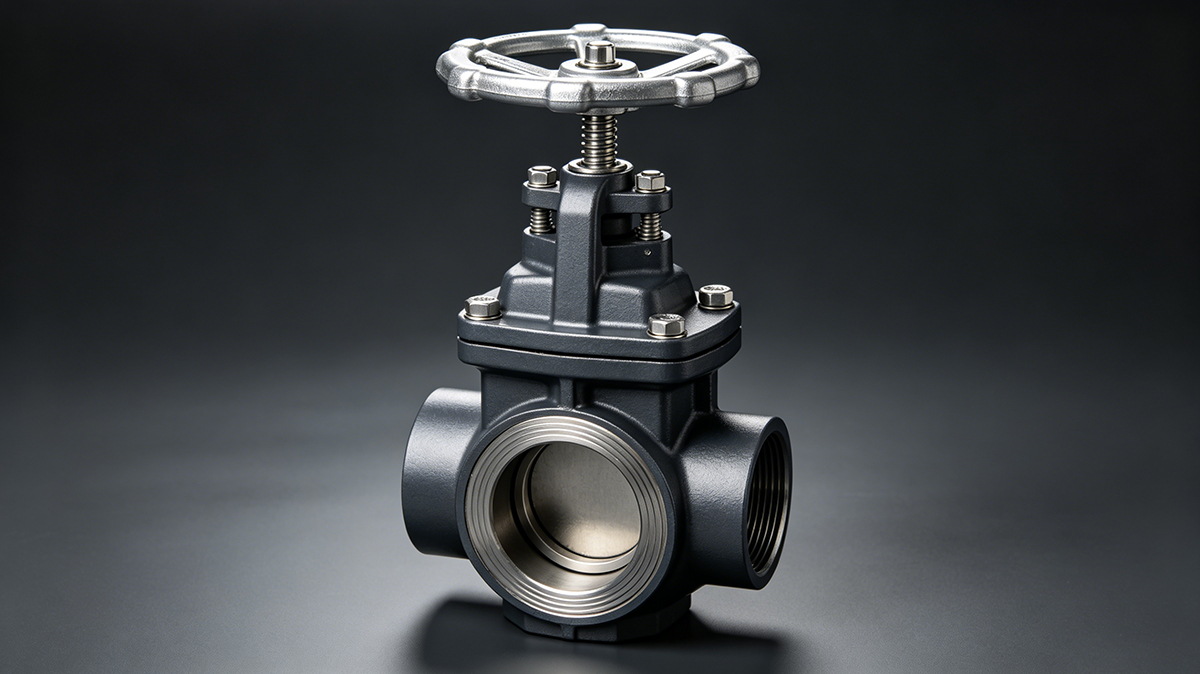
Handwheel gate valves are classified by stem configuration, wedge design, and body-bonnet connection. Each variation serves specific operational and installation requirements.
The stem rises visibly as the valve opens; the handwheel remains at a fixed elevation
Visual position indication — operators can confirm valve status at a glance without indicators
Threaded stem components are located outside the media stream, reducing corrosion and packing wear
Preferred for above-ground installations where stem clearance is available and visual status is required
Commonly specified per API 600 for petroleum and petrochemical services
The stem rotates in place without vertical movement; the handwheel and stem do not rise
Compact design — requires less overhead space, suitable for underground or confined installations
Stem threads are in contact with the process media, which can accelerate thread wear in corrosive services
Position must be verified by indicator or feel — no visual stem extension to confirm open/closed state
Commonly used in waterworks, low-pressure utility systems, and installations with vertical space constraints
Single-piece wedge — the simplest and most economical design
Tolerates some angular misalignment between seats; robust in thermal cycling
Best suited for moderate temperature and pressure applications
Risk: can bind in high-temperature services where thermal expansion distorts the body
One-piece wedge with a circumferential cut that allows slight angular adjustment
Compensates for thermal expansion and body distortion in high-temperature service
Most common wedge type in API 600 gate valves for refinery and power generation
Slightly higher cost than solid wedge but significantly improved sealing reliability at elevated temperatures
Two separate disc halves forced apart by a spreading mechanism
Provides independent sealing on both seats; self-adjusting for thermal movement
Used in high-pressure, high-temperature steam and condensate applications
More complex internal mechanism requires careful maintenance during overhaul
Bolted bonnet — the industry standard for API 600 valves; allows in-field maintenance and repacking; gasketed joint ensures seal integrity across pressure classes
Pressure-seal bonnet — used for Class 600+ high-pressure applications; internal pressure reinforces the bonnet seal, making it tighter as pressure increases; lighter weight than bolted designs at high class ratings
Welded bonnet — eliminates potential leak path at bonnet joint; used in toxic or radioactive services where zero external leakage is mandated; not maintainable without cutting
In short: Handwheel gate valves are categorized by stem type (rising vs. non-rising), wedge design (solid, flexible, split), and bonnet connection (bolted, pressure-seal, welded) — each combination optimized for specific pressure, temperature, and maintenance requirements.
Understanding the engineering specifications behind handwheel gate valves is essential for correct selection, compliance, and procurement. The following data reflects current industry-standard parameters.
| Component | Common Materials | Application Context |
|---|---|---|
| Body and bonnet | WCB, LCB, WC6, WC9, C5, C12 | Carbon and low-alloy steel for general petroleum service |
| Body and bonnet (corrosion-resistant) | CF8 (SS304), CF8M (SS316), CF3M (SS316L) | Corrosive media, chemical processing, offshore |
| Body and bonnet (high-alloy) | Duplex (CD3MN), Super Duplex, Inconel, Hastelloy | Seawater, sour gas (NACE MR0175), aggressive chemicals |
| Wedge/disc | Same as body or upgraded — 13Cr (CA15), SS316 overlay, Stellite hardfacing | Sealing surface hardness matched to service conditions |
| Stem | ASTM A182 F6a (13Cr), F304, F316, F22, Monel, Inconel | Strength and corrosion resistance at operating temperature |
| Seat rings | 13Cr, SS316, Stellite No.6, CoCr alloy overlay | Hardfacing provides erosion and galling resistance |
API 600 — bolted bonnet steel gate valves for refinery service; the primary specification for cast steel handwheel gate valves
API 602 — compact forged steel gate valves; smaller-bore applications (NPS 1/2"–2")
ASME B16.34 — valve flanged and butt-welded end pressure-temperature ratings
ASME B16.5 — pipe flanges and flanged fittings (flange dimensions and bolt patterns)
ASME B16.10 — face-to-face and end-to-end dimensions
API 598 — valve inspection and testing (shell test, seat test, backseat test)
BS 1414 / BS 5352 — British Standards equivalents for steel gate valves
| Parameter | Typical Range |
|---|---|
| Pressure class | Class 150, 300, 600, 900, 1500, 2500 |
| Size range (cast) | NPS 2"–42" (DN50–DN1050) |
| Size range (forged) | NPS 1/2"–2" (DN15–DN50) |
| Temperature range | -196°C to +560°C (material-dependent) |
| End connections | RF/RTJ flanged, butt-weld, socket-weld, threaded (NPT/BSP) |
OS&Y stems: minimum stem diameters per API 600 Table 5 (varies by class and size)
Handwheel diameter: sized to produce required rim pull within 80 lb (360 N) per MSS SP-91
Backseat: machined on stem and bonnet to allow packing replacement under pressure
Packing: minimum 5 rings of pre-formed graphite (flexible graphite for high-temperature service)
Handwheel material: ductile iron (standard), carbon steel (high-strength), or stainless steel (corrosive environments)
In short: Handwheel gate valves conform to API 600/602 and ASME B16.34 design standards, spanning Class 150–2500 in sizes NPS 1/2"–42", with material options from WCB carbon steel through Duplex and nickel alloys — all test-verified per API 598.
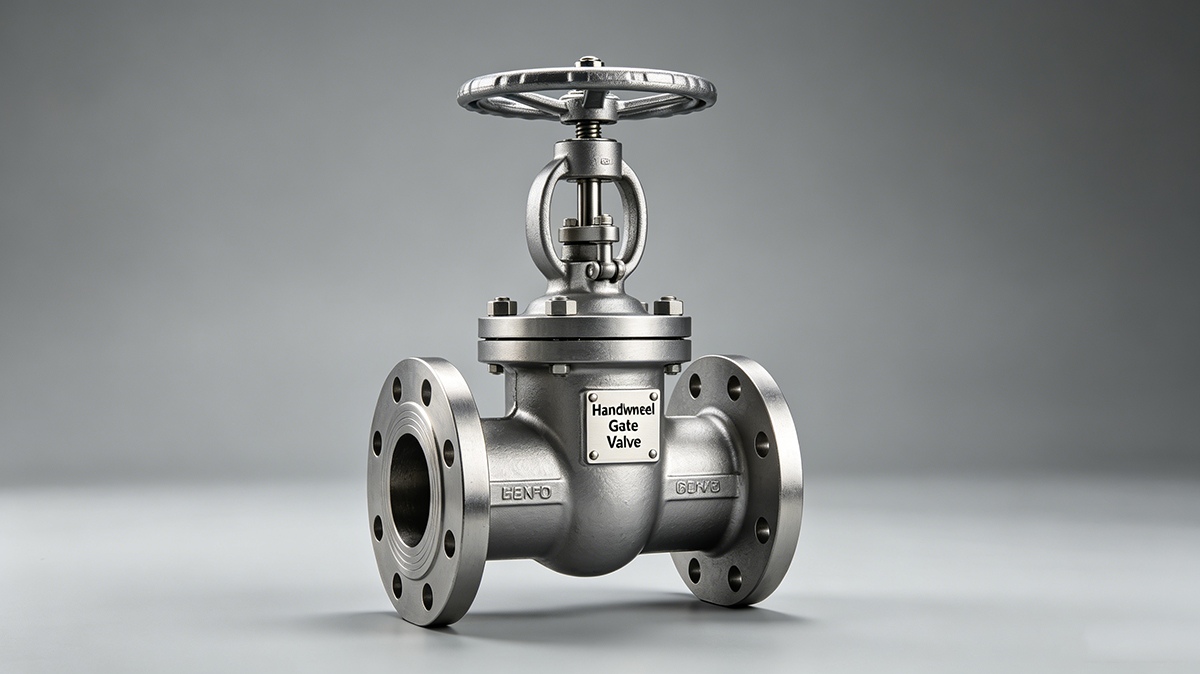
Handwheel gate valves are deployed across virtually every sector of industrial fluid handling. Their common thread: applications requiring reliable, infrequent on/off isolation rather than modulating control.
Pipeline isolation at compressor stations and metering points
Refinery unit isolation (distillation columns, heat exchangers, reactor bypasses)
Wellhead shutdown valves in non-automated installations
Tank farm isolation for maintenance and inventory segregation
Typically specified as API 600, Class 300–1500, WCB or alloy steel body
Reactor feed and product isolation
Utility isolation (steam, cooling water, nitrogen)
Corrosive service requiring SS316, Duplex, or Hastelloy construction
Applications requiring bubble-tight metal-to-metal shutoff
Often requires NACE MR0175/ISO 15156 compliance for sour service
Main steam and feedwater isolation (high-pressure, high-temperature)
Turbine bypass and drain isolation
Condensate system shutoff
Pressure-seal bonnet designs predominant in Class 600+ steam service
Materials: WC6, WC9, C12 for elevated-temperature creep resistance
Distribution network isolation valves
Pump station suction and discharge isolation
Reservoir and tank inlet/outlet shutoff
Non-rising stem (IBB) designs common for underground vault installations
Materials: ductile iron, cast iron, bronze, epoxy-coated carbon steel
Seawater cooling system isolation
Ballast and bilge system shutoff
Fire main isolation
Bronze, SS316, or Duplex construction for saltwater corrosion resistance
Compliance with classification society rules (DNV, Lloyd's, ABS)
Process water isolation
Tailings and slurry line shutoff (with metal-seated or hardened wedge designs)
Acid leach circuit isolation
Abrasion-resistant trim specifications (Stellite or tungsten carbide overlay)
In short: Handwheel gate valves serve isolation duties across oil and gas, petrochemical, power generation, water treatment, marine, and mining sectors — specified wherever reliable, power-independent shutoff is required without the need for throttling control.
Correct valve selection prevents premature failure, safety incidents, and costly replacement. The following eight-point selection framework covers the critical decision variables.
Clean fluids (water, steam, air) allow standard trim materials
Corrosive media (acids, chlorides, H₂S) require stainless, Duplex, or nickel-alloy construction
Abrasive or erosive media (slurry, catalyst) demand hardened seats and Stellite or tungsten carbide overlays
Sour service (H₂S-containing) mandates NACE MR0175/ISO 15156 compliant materials
Select pressure class (150–2500) based on maximum operating conditions, not nominal pipe class
Verify pressure-temperature ratings per ASME B16.34 for the specified body material at operating temperature
Account for thermal cycling — flexible wedge designs prevent binding in high-temperature service
Cryogenic applications (below -46°C) require extended bonnets and special material grades (LCB, LCC, CF3M)
Rising stem (OS&Y): choose when visual position indication is needed and overhead clearance is available
Non-rising stem (IBB): choose for underground installations, confined spaces, or where vertical clearance is limited
Consider packing accessibility — OS&Y stems allow easier repacking under some conditions
Solid wedge: low-cost, general-purpose; acceptable for moderate conditions and non-critical services
Flexible wedge: standard for API 600 refinery service; accommodates thermal expansion; the most commonly specified industrial option
Split disc: high-pressure steam and condensate; self-compensating for seat distortion; higher initial cost but superior long-term sealing
Flanged (RF/RTJ): most common for Class 150–600; allows easy removal and replacement
Butt-weld: preferred for Class 600+ and high-temperature service; eliminates potential leak path at flange joint
Socket-weld / threaded: forged valve (API 602) sizes, typically NPS 2" and below
API 600 for cast steel gate valves in petroleum service
API 602 for forged steel gate valves in compact installations
API 598 for testing acceptance criteria
Fire-safe design per API 607 where flammable media is present
NACE MR0175 for sour gas service
Local regulatory requirements (PED 2014/68/EU for European market, SASO for Gulf States)
Maximum allowable rim pull per MSS SP-91: 80 lb (360 N) for unassisted manual operation
Large-diameter or high-pressure valves may exceed handwheel torque limits — consider gear operator upgrade
Chainwheel extensions available for elevated or hard-to-reach installations
Calculate required torque at maximum differential pressure to confirm handwheel adequacy before ordering
Verify design code compliance and material traceability (MTR per EN 10204 3.1)
Confirm third-party inspection capability and NDE (ultrasonic, radiographic, liquid penetrant)
Evaluate delivery track record for your required material grades and pressure classes
Check after-sales support: spare parts availability, technical documentation, and warranty terms
In short: Choosing a handwheel gate valve requires systematic evaluation of process media, pressure-temperature conditions, stem configuration, wedge type, end connections, compliance standards, operator effort, and manufacturer capability — in that order of priority.
The industrial valve market includes numerous qualified manufacturers across Asia, Europe, and North America. The following overview covers representative suppliers recognized for API 600/602 gate valve production.
Chinese industrial valve groups — multiple manufacturers in Zhejiang province (Wenzhou area) producing API 600 cast steel gate valves in WCB, WC6, WC9, CF8, CF8M, and Duplex materials; factory-direct pricing typically 30–50% below Western-brand equivalents; key differentiators include full supply-chain integration (foundry through machining and assembly) and ISO 9001 certified quality systems
Japanese precision valve manufacturers — high-specification gate valves for power generation and nuclear applications; recognized for metallurgical consistency and long service life; premium pricing tier
Indian valve manufacturers — competitive pricing for API 600 gate valves in standard materials; growing market share in Middle East and Southeast Asian procurement; ISO and API certifications widely held
UK and German engineering firms — specialty gate valves for severe service (high-pressure steam, subsea, nuclear); extensive documentation and third-party certification; highest pricing tier
Italian valve manufacturers — strong in petrochemical and offshore specifications; API 600 and API 602 product lines; competitive pricing within European supply chains
US-based valve companies — API 600 gate valves for domestic refinery and pipeline markets; extensive distribution networks; compliance with Buy American provisions for government-funded projects
Canadian manufacturers — focus on oil sands, sour gas, and cryogenic applications; NACE-compliant materials standard
When evaluating potential suppliers, prioritize:
Documented API 600/602 design compliance with third-party validation
Material traceability (heat numbers, MTRs per EN 10204 3.1)
API 598 testing records for each production lot
Export experience to your target market (documentation, packaging, logistics)
Minimum 3-year structural warranty and spare parts availability commitment
In short: Qualified handwheel gate valve manufacturers span Asia, Europe, and North America — with Chinese manufacturers offering the strongest price-to-specification ratio for standard API 600 applications, while European and North American suppliers serve premium and severe-service niches.
Handwheel gate valve pricing varies significantly based on material, size, pressure class, and procurement channel. The following data reflects 2026 market conditions.
| Valve Specification | Size | Price Range (USD) |
|---|---|---|
| WCB, Class 150, flanged, RF | 2"–4" | $80–$250 |
| WCB, Class 150, flanged, RF | 6"–12" | $200–$800 |
| WCB, Class 300, flanged, RF | 2"–4" | $120–$350 |
| WCB, Class 300, flanged, RF | 6"–12" | $350–$1,500 |
| SS316 (CF8M), Class 150, flanged | 2"–4" | $200–$600 |
| SS316 (CF8M), Class 300, flanged | 4"–8" | $500–$2,000 |
| Duplex, Class 600, flanged | 4"–8" | $1,500–$5,000 |
| Alloy steel (WC9/C12), Class 900+, butt-weld | 6"–12" | $3,000–$12,000+ |
Prices reflect factory-direct sourcing from Asian manufacturers; Western-brand pricing is typically 2–4× higher for equivalent specifications
Custom specifications (special trim, NACE compliance, fire-safe design, extended bonnets) add 15–40% to base pricing
Material grade: SS316 costs 1.5–2.5× WCB; Duplex and nickel alloys cost 3–8× carbon steel base
Pressure class: each step up in class (150→300→600→900) increases price 40–80% due to heavier wall requirements
Size: price scales non-linearly; large-bore valves (14"+) carry disproportionate cost increases due to casting and machining complexity
Trim specification: Stellite or CoCr overlay on seats and wedge adds 10–25% to base price
Testing and certification: third-party inspection, NDE, and specialized test requirements (fire test, fugitive emission test) add 5–15%
Factory-direct procurement from manufacturers with integrated foundries eliminates 25–50% distributor markup
Standardized specifications (API 600, common materials, standard trim) reduce both unit cost and lead time
Volume ordering across project phases: consolidated purchase orders of 50+ units typically yield 10–20% quantity discounts
Material substitution: evaluate whether WCB meets process requirements before defaulting to SS316 — carbon steel is adequate for many non-corrosive services at significant cost savings
In short: Handwheel gate valve prices range from $80 for small carbon steel Class 150 units to $12,000+ for high-alloy Class 900+ specifications — with material grade, pressure class, and procurement channel representing the three largest cost variables.
A rising stem (OS&Y) gate valve has a stem that physically rises when the valve opens, providing visual position indication. A non-rising stem (IBB) valve rotates the stem internally without vertical movement, requiring less overhead space. OS&Y is standard for API 600 above-ground installations; IBB is preferred for underground or confined-space applications.
No. Gate valves are designed for full-open or full-closed isolation service. Partial opening causes high-velocity flow across the wedge and seat surfaces, leading to erosion, vibration, and wire-drawing damage. For flow regulation, use globe valves, butterfly valves, or control valves instead.
Per MSS SP-91, the maximum recommended rim pull for manual handwheel operation is 80 lb (360 N). If the required operating torque exceeds this limit at maximum differential pressure, a gear operator (bevel gear) should be specified to reduce the manual effort to within acceptable limits.
The primary standards are API 600 (cast steel gate valves for refinery service), API 602 (forged steel gate valves), ASME B16.34 (pressure-temperature ratings), and API 598 (inspection and testing). For European markets, BS 1414 and EN 1984 apply. Fire-safe requirements follow API 607 or API 6FA.
Specify flexible wedge for services with temperatures above 200°C (392°F), frequent thermal cycling, or where body distortion from piping loads is expected. The flexible wedge's ability to adjust its angle compensates for seat misalignment caused by thermal expansion, preventing binding and ensuring consistent sealing.
Calculate the design pressure and temperature for your system, then consult ASME B16.34 pressure-temperature rating tables for the selected body material. Select the lowest pressure class that exceeds your design conditions at operating temperature. Always verify ratings at temperature — a Class 300 valve in WCB has lower allowable pressure at 400°C than at ambient.
Routine maintenance includes periodic packing adjustment or replacement (typically every 2–5 years depending on service), visual inspection of stem and handwheel integrity, and verification of full-open and full-closed travel. Body-bonnet and flange gaskets should be checked during scheduled outages. API 598 re-testing is recommended after major maintenance.
Handwheel operation is preferred when: the valve is infrequently operated (a few cycles per year), no power source is available or reliable, the installation requires failsafe position retention, or capital budget constraints favor the lower cost of manual operation. Handwheel valves cost 40–70% less than equivalent actuated configurations and require no instrument air, electric supply, or control system integration.
Source Your Handwheel Gate Valves with ConfidenceSelecting the right handwheel gate valve demands precision — from material grade and pressure class through stem configuration and compliance verification. The cost of a wrong specification far exceeds the cost of getting it right the first time: unplanned shutdowns, safety incidents, and replacement valve procurement under emergency conditions carry 3–10× the cost of properly specified initial installations.
Whether your project requires standard WCB Class 300 isolation valves for a refinery turnaround, Duplex Class 600 seawater service valves for an offshore platform, or forged steel API 602 valves for a chemical plant utility system, working with an experienced manufacturer who provides certified materials, full API 598 testing, and traceable documentation is the most reliable path to on-spec delivery.
For API 600 and API 602 handwheel gate valves with full material certification, custom trim specifications, and factory-direct pricing, visit chlgvalve.com.