

Date:2026-06-05 Views:52
You use a high temperature gate valve to control flow in tough places. This valve works well when temperatures go over 425°C. You find it in pipelines, refineries, or geothermal plants. A high temperature gate valve handles high-pressure and hot fluids. It does not cause big drops in pressure. You see these valves in power plants and chemical factories. Reliability is important in these places. Good material choices and smart designs help the valve fight rust and bending. Picking the right high temperature gate valve keeps things safe and working for a long time.
Key TakeawaysHigh temperature gate valves manage hot fluids over 425°C. They are important in pipelines and refineries.
Pick materials like stainless steel or Inconel. These materials last long and resist heat and rust.
Check and fix valves every three months. This stops leaks and keeps things safe.
Use flexible graphite packing for good sealing in hot places.
Follow industry rules and guides for safety and trust in picking and putting in valves.

High temperature gate valves help control hot fluids or gases. They work best when it is hotter than 425°C. You see them in power plants, refineries, and geothermal stations. A gate valve uses a flat or wedge-shaped gate. The gate moves up to let fluid pass. When the gate moves down, it blocks the flow. When open, fluid moves through easily. When closed, nothing can get by.
These valves have special features for tough jobs. They are made from strong metals like stainless steel, Inconel, or Hastelloy. These metals do not bend or break in high heat. Inside, the valve has hard-faced seats. These seats do not wear out fast. They keep the seal tight, even after many uses. Engineers use metal-to-metal seals in these valves. These seals work in both cold and hot places, even up to 800°C. This means the valve stays sealed, even if the temperature changes quickly.
You need these valves where safety and reliability are important. In a geothermal plant, the valve handles high pressure and heat. It stops leaks and keeps the flow under control. You also find them in chemical factories and oil refineries. They help move steam, crude oil, or other hot fluids.
You might ask how these valves are different from regular gate valves. The main difference is how they handle heat and pressure. Standard gate valves work for water or oil at normal heat. If you use them in very hot places, they can break. The seals might leak, or the metal might bend.
High temperature gate valves have special designs to fix these problems. Some have bonnet designs that let the valve grow or shrink with heat. This stops the valve from cracking or getting stuck. The seats inside are hard or made from special alloys. This helps them last longer with hot, fast-moving fluids. They also have better packing and gaskets. These parts keep the valve sealed, even when it is very hot.
Here is a table that shows some key design changes in high temperature gate valves:
|
Design Modification |
Purpose |
|---|---|
|
Bonnet designs for thermal growth |
Lets the valve expand or shrink with heat, so it does not break. |
|
Hard-faced seats or special alloys |
Stops damage from hot, fast fluids. |
|
Enhanced packing/gasket solutions |
Keeps the seal tight when it is very hot. |
You also need to pick the right material for these valves. Here are some common materials:
Stainless steel
Inconel
Hastelloy
High temperature gate valves must follow strict rules. They need to be safe and last a long time, even in hard places. If you use the wrong valve, you could get leaks or accidents. That is why you must use a high temperature gate valve for very hot jobs.
Here is a table that shows the temperature classes and materials for high temperature gate valves:
|
Temperature Class |
Temperature Range (°C) |
Material Types |
|---|---|---|
|
Class I |
425 - 550 |
WC6, WC9, CF8M |
|
Class II |
550 - 650 |
WC6, WC9, CF8M |
|
Class III |
650 - 730 |
WC6, WC9, CF8M |
Note: Always check the temperature and pressure ratings before you pick a gate valve for your system.
High temperature gate valves help keep your plant or pipeline safe. They let you control hot fluids and protect your equipment. When you know the differences between these valves and standard ones, you can make better choices for your work.
Gate Valve Operation in High-Temperature Service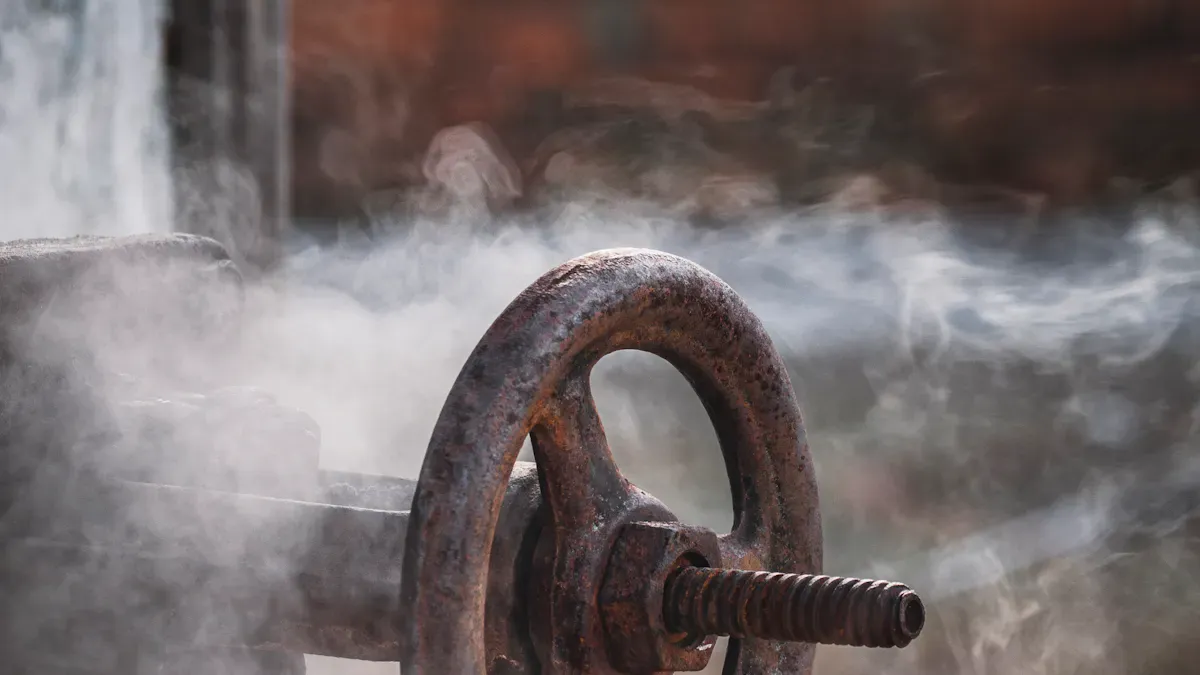
A gate valve helps control flow in hot places. The main parts are the body, gate, stem, and handwheel or actuator. The gate is flat or shaped like a wedge. It moves up and down inside the valve. When you lower the gate, it blocks the flow. When you lift the gate, fluid can move through. This design is good for high-temperature service. It gives a tight shutoff.
Turn the handwheel or actuator.
The stem turns and moves the gate.
The gate slides up to open or down to close.
The valve lets fluid move or stops it, depending on the gate.
You turn the stem to control the gate valve. If you use your hand, you turn a handwheel. If it is automatic, an actuator moves the stem. There are two stem types. A rising stem goes up when you open the valve. A non-rising stem stays at the same height. Both types work well in hot places. The gate moves smoothly, so you can control flow well. The stem and gate help stop leaks and keep things safe.
You need strong sealing and packing for hot service. Flexible graphite packing is the best choice. It works with very high heat and strong chemicals. You see graphite packing in refineries and chemical plants. It keeps the seal tight, even when the stem moves. Graphite packing works up to 600°C and does not rust. It presses together well, so the seal is strong.
|
Material |
Benefits |
|---|---|
|
Corrugated metal seals |
Strong and does not break in high heat |
|
Flexible graphite packing |
Slippery, does not react with chemicals, spreads heat |
You use graphite packing for hot service. It stops leaks and keeps your gate valve working safely.
Materials and Design for High-Temperature Gate ValvesYou must pick the right heat resistant valve material for high temperature gate valves. Stainless steel, Inconel, and Hastelloy are popular choices. Each heat resistant valve material has its own pressure-temperature rating. This rating shows how much heat and pressure the valve can take. Many plants use 304 and 316 stainless steel. These heat resistant valve material types work well in lots of places. Duplex stainless steel and nickel-based alloys like Inconel and Hastelloy give extra protection. They help your valve last longer in tough spots.
Here is a table that lists the most common heat resistant valve material and their temperature limits:
|
Material |
Temperature Limit (°C) |
Application |
|---|---|---|
|
WCB, WCC, A105, WC6, WC9 |
450 |
Water and steam applications |
|
C5, CF8, CF3, CF8M, CF3M |
450 |
Sulfur-containing oil applications |
|
High-temperature grade I steel |
550 |
Heavy oil catalytic cracking units |
|
High-temperature grade II steel |
650 |
Heavy oil catalytic cracking units |
|
High-temperature grade III steel |
730 |
Large-scale heavy oil catalytic cracking units |
|
CF8M |
816 |
General high temperature applications |
|
Special design valves |
> 816 |
Shut-off valves with special design methods |
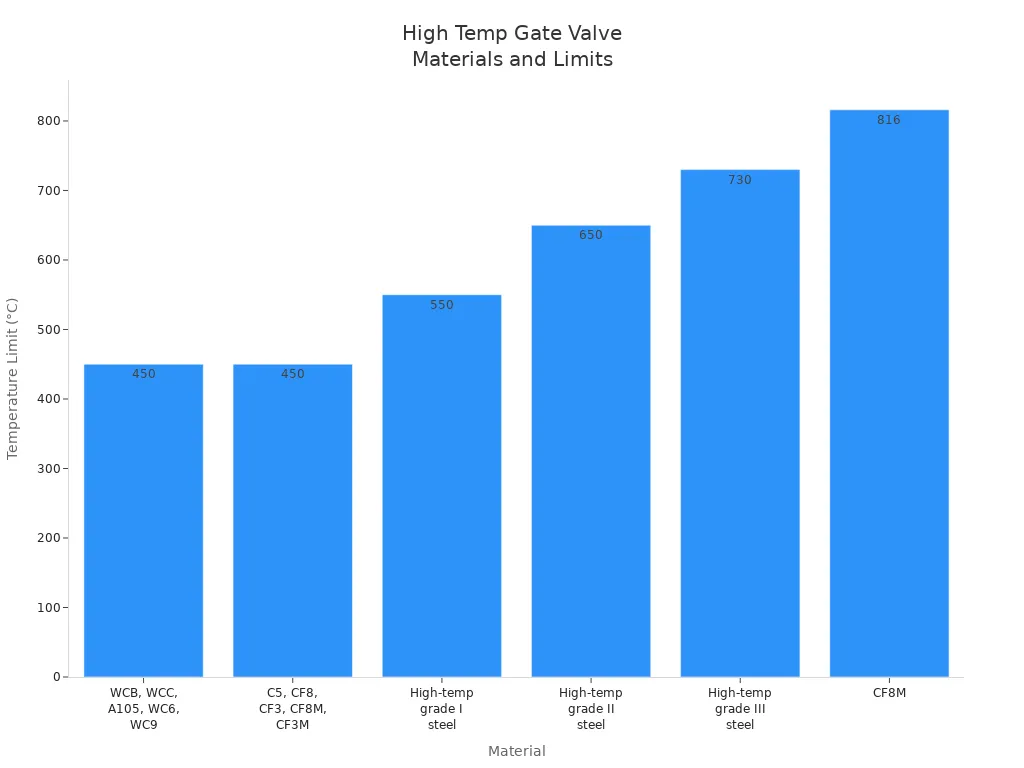
You want your heat resistant valve material to fight heat and rust. Ferritic stainless steel is strong and resists corrosion. Duplex stainless steel is even tougher. These heat resistant valve material types work well in chemical plants and offshore sites. Nickel-based alloys like Inconel and Hastelloy stay strong and resist rust, even in high heat. Cobalt-based alloys such as Stellite protect metal-to-metal seats from wearing out. Using the right heat resistant valve material helps your valve handle high pressure-temperature rating and last longer.
|
Material Type |
Key Properties |
|---|---|
|
Ferritic Stainless Steel |
Increases yield strength, resists intergranular corrosion, and improves chloride stress corrosion cracking resistance. |
|
Duplex Stainless Steel |
Ensures durability, corrosion resistance, and suitability for harsh chemical, petrochemical, and offshore environments. |
Tip: Always check the pressure-temperature rating for your heat resistant valve material before you install a valve.
You need special design features to keep high temperature gate valves safe. Extended bonnets and heat-dissipating fins protect the stem and packing from heat. Live-loaded stem packing uses springs to keep the seal tight, even when the valve heats up or cools down. Hard-facing on sealing surfaces adds a layer of heat resistant valve material to metal-to-metal seats. This helps the seats last longer and keeps the seal strong. Metal-to-metal seats are important for high temperature service. They do not melt or break down like soft seals. You get a better pressure-temperature rating and longer valve life.
Here are some important design features:
Extended bonnets keep heat away from the stem and packing.
Live-loaded stem packing keeps the seal tight during thermal cycles.
Hard-facing on metal-to-metal seats protects against wear and heat.
|
Design Feature |
Description |
|---|---|
|
Extended Bonnets |
Protects vital components from excessive heat by increasing distance between hot fluid and sealing area. |
|
Live-Loaded Stem Packing |
Maintains constant compressive force on packing rings to reduce leakage risk despite thermal cycles. |
|
Hard-facing on Sealing Surfaces |
Protects sealing surfaces from wear and degradation, extending the life of the valve in high-temperature service. |
When you pick the right heat resistant valve material and design, your valve meets the pressure-temperature rating you need. Metal-to-metal seats and strong alloys help your valve work safely in very hot places.
Applications and Best Practices for High-Temperature Gate ValvesHigh temperature gate valves are used in many industries. These valves help control hot oil, steam, and other fluids. You can find them in pipelines, refineries, and geothermal plants. The table below shows where these valves are used and what fluids they control:
|
Industry |
Types of Fluids Handled |
|---|---|
|
Oil and Gas Industry |
Crude oil, natural gas, steam, hot oil |
|
Power Generation |
Superheated steam, high-pressure feedwater |
|
Chemical and Petrochemical |
Corrosive acids, volatile substances, hot oil |
These valves are used in steam and hot oil lines. These lines move hot oil and steam to different parts of the plant. Strong valves are needed to keep hot oil and steam safe.
You need to pick the right valve for hot oil and steam. Choose valves made from materials that fight heat and rust. Make sure the valve fits the pressure and temperature of your hot oil system. When you put in a valve, line it up with the pipeline. Tighten the bolts the same amount. This helps stop leaks and keeps hot oil moving safely. You should use sensors to check heat and shaking. This helps you find problems early in steam and hot oil lines.
Tip: Always look at the packing gland for leaks. Good packing keeps hot oil and steam inside the valve.
You need to check your valves often to keep them working. Look at your valves every three months if you use them with hot oil. Clean and oil the valve a lot. Use metal-seated or rust-proof valves for hot oil. Add sensors to watch for heat and shaking. Always check the packing gland. Oil the moving parts. Clean the valve to get rid of hot oil buildup. If you skip these steps, hot oil can leak and cause damage.
The most important thing is to keep the valve in its heat limit. If you use the valve with hot oil above its limit, it will break faster. Short times above the limit are not too bad, but long times will hurt the valve. You must not make common mistakes. Do not use the wrong material for hot oil. This can cause rust and seal problems. Do not put the valve in the wrong way. If the bolts are not even or the valve is not straight, it can leak. Do not forget to check and oil the valve. If you skip this, the valve will stop working.
Note: Good care keeps your hot oil valves safe and working well.
High temperature gate valves let you control hot fluids safely. Many industries use these valves. You must pick the right materials and designs. This helps the valve work well for a long time. Always follow good steps when you choose, install, and check your valve. This keeps your system safe.
Gate valves are used in oil, gas, and power plants.
New materials and smart technology make things safer and better.
Checking valves often and installing them right stops leaks and damage.
|
Key Standard |
Purpose |
|---|---|
|
ISO 9001 |
Makes sure quality is managed |
|
ASME |
Keeps mechanical engineering safe |
FAQ
Always use industry standards and safety rules for the best results.
You need a valve made from strong metals like stainless steel or Inconel. These materials do not bend or break in high heat. Special seals and packing also help the valve work safely with hot fluids.
You should look at the pressure-temperature ratings. These ratings show the highest pressure and temperature the valve can take. Always match the valve to your system’s needs.
You should check your valves every three months. Regular checks help you find leaks or wear early. Clean and oil the valve to keep it working well.
You should not use standard gate valves for steam or hot oil. These valves can leak or break in high heat. Always choose a high temperature gate valve for these jobs.
You should use flexible graphite packing. This material works well with high heat and strong chemicals. It keeps the seal tight and stops leaks.