

Date:2026-06-17 Views:20
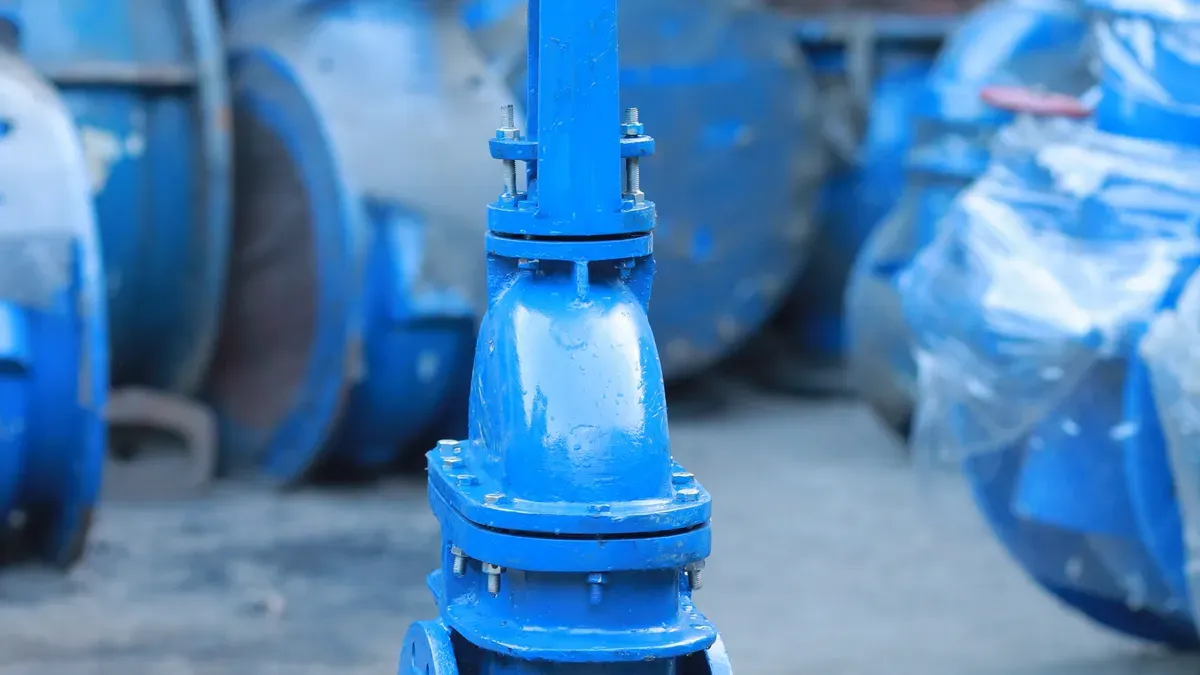
You can find the DIN 3352 gate valve in many European factories. It is used when accuracy is important. This gate valve measures parts in millimeters. It uses the PN system to show how much pressure it can handle. This makes it different from valves made to ANSI, BS, or JIS standards. The table below shows these main differences:
|
Feature |
DIN 3352 Gate Valves |
Other Standards (ANSI, BS, JIS) |
|---|---|---|
|
Dimensions |
Measured in millimeters |
Uses a class system |
|
Pressure Ratings |
Uses PN system (e.g., PN16) |
Uses classes (e.g., Class 150) |
|
Flange Connections |
Follows DIN specifications |
Varies by standard |
|
Design and Construction |
Focus on precision and quality |
Built for tough conditions |
|
Applications |
Common in European factories |
More prevalent in North America |
If you know these differences, you can pick the best valve for your job. You can also keep your equipment working well.
Key TakeawaysDIN 3352 gate valves are made by German rules. These rules make sure the valves are accurate and last a long time. The valves work well in factories and big systems.
These valves use the PN system to show pressure levels. They are measured in millimeters. This makes them different from ANSI, BS, or JIS standards.
DIN 3352 F4 valves are small and light. They fit well in tight spaces. F5 valves are good for places that need longer valves.
The valves are made from strong materials like ductile iron and stainless steel. They have special seals to stop leaks. This helps them last a long time.
To keep the valves working well, regular care is needed. This includes checking them, adding oil, and changing seals. These steps help the valves work better and last longer.
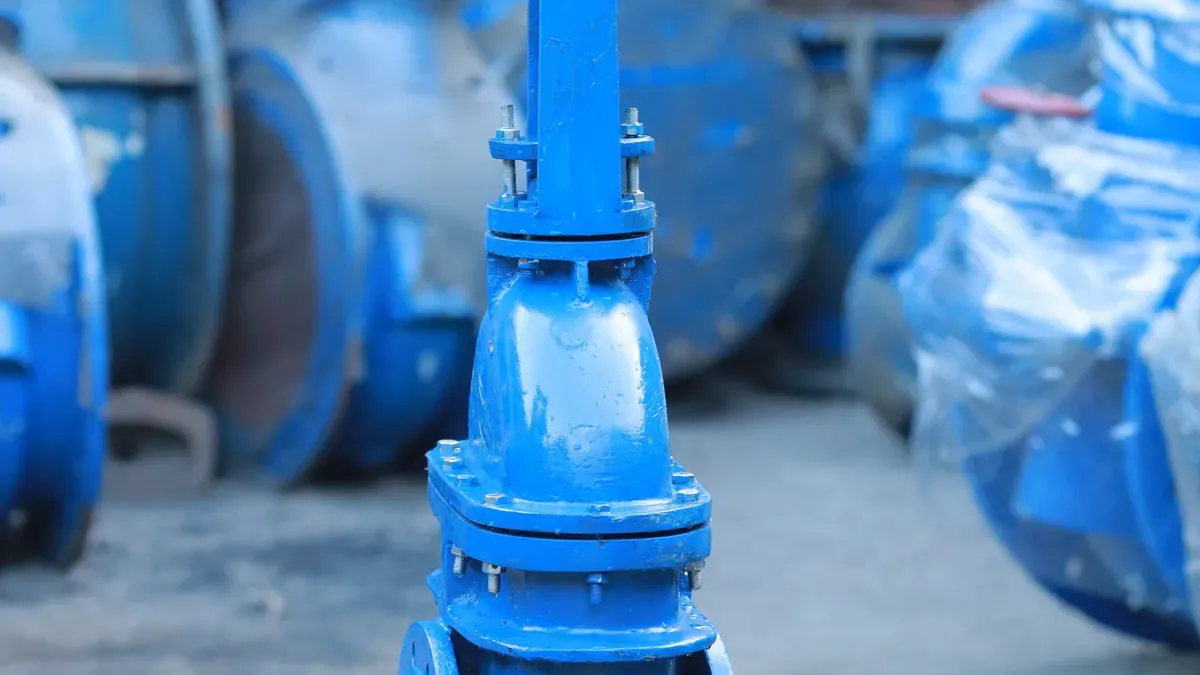
A DIN 3352 gate valve follows strict German rules. This valve helps control liquid flow in many places. You can use it for water supply and wastewater treatment. It also works in other factory systems. The design makes the valve strong and safe. It is easy to put in place.
Here are some important features:
The valve has a tough seat made from materials like EPDM or NBR. This stops leaks and helps seal the valve.
It is light, so you can install it without much trouble.
The valve does not rust or wear out fast. It lasts for many years.
It keeps a tight seal and cuts flow loss by up to 20%.
You must check and fix it often to keep it working well.
When you pick a DIN 3352 gate valve, you get a high-quality product. It works well and meets strict standards.
DIN 3352 F4 is a common type of gate valve. It sets rules for the valve’s size, shape, and how it connects. You might wonder how DIN 3352 F4 is different from F5. The table below shows the main differences:
|
Feature |
DIN 3352 F4 |
DIN 3352 F5 |
|---|---|---|
|
Body Material |
Cast iron, ductile iron |
Cast iron, ductile iron |
|
Pressure Ratings |
PN10/16 |
PN10/16 |
|
Structural Length |
Shorter than F5 |
Longer than F4 |
|
Face to Face Length Standard |
DIN 3202 F4 |
DIN 3202 F5 |
|
Connection Flange Types |
DIN2543, DIN2544, DIN2545, DIN2546 |
DIN2543, DIN2544, DIN2545, DIN2546 |
DIN 3352 F4 valves have a shorter body. This makes them fit in small spaces. The short length can also make the valve lighter and cheaper. Both F4 and F5 use strong materials and handle the same pressure. If you choose DIN 3352 F4, you get a small and dependable valve for your pipes.
You must pick between a rising stem and a non-rising stem for DIN 3352 F4 gate valves. Each kind has good points and bad points. The table below helps you compare them:
|
Feature |
Rising Stem Gate Valve |
Non-Rising Stem Gate Valve |
|---|---|---|
|
Space Requirement |
Needs more room because the stem moves up |
Smaller design, fits in tight spaces |
|
Environmental Resistance |
Stem is open to dirt and water |
Stem is protected, keeps out dirt and water |
|
Application Suitability |
Good for small-flow, low-pressure jobs |
Works well for high-flow, high-pressure jobs |
|
Maintenance |
Easy to fix because you can see the parts |
Harder to fix, must take apart the valve |
|
Visual Monitoring |
You can see the stem move up or down |
You need a tool to check the valve’s position |
If you do not have much space, a non-rising stem is better. The stem stays inside the valve, so it fits in small spots. If you want to see how open the valve is, a rising stem is easier. You can watch the stem move as you turn the valve. For dirty or outdoor places, a non-rising stem keeps the parts safe from dust and water. Think about your space, how often you need to fix the valve, and how you want to check the valve before you choose.
Key Features of DIN 3352 Gate ValvesIf you pick a din 3352 f4 gate valve, you get a strong product. It is made from tough materials. These include ductile iron, carbon steel, stainless steel, and copper alloy. Each material is good for different jobs. Ductile iron is strong and bends without breaking. Carbon steel is used for many factory jobs. Stainless steel does not rust, so it is good for wet places. Copper alloy is used when you need extra strength.
Here is a table that lists the main materials and their details:
|
Material Type |
Specification |
|---|---|
|
Ductile Iron |
ASTM A536 |
|
Carbon Steel |
A216 WCB |
|
Stainless Steel |
A351 CF8/CF8M |
|
Copper Alloy |
B148-95400/95800 |
These materials make din 3352 f4 valves last longer. They also stop rust and damage. You can trust the valve to work well in hard places. The design is simple, so it is easy to use. You can turn it by hand or use a machine. The way it is built helps it work well for a long time.
Sealing is a key part of a din 3352 f4 gate valve. You want a valve that keeps liquids inside and stops leaks. These valves use special seals like NBR rubber rings. NBR seals block water and oil. They do not get old fast. This helps the valve leak less, often under 0.1%. The valve can also seal both ways with no leaks.
|
Sealing Component |
Description |
|---|---|
|
NBR Rubber Seal Ring |
Water/oil-resistant and anti-aging, leakage rate ≤0.1% |
|
Sealing Performance |
Bi-directional bubble-tight sealing, zero leakage |
The soft seat in din 3352 f4 valves helps stop leaks. This design means you do not have to fix it often. You get a tight seal that lasts a long time. This keeps your system safe. Good sealing means the valve works well at many pressures. You can count on good flow and less chance of losing liquid.
You need to know how a din 3352 f4 gate valve fits in your system. These valves have different ends. The most common are flanged and butt weld ends. Flanged ends are easy to put in and hold tight. Butt weld ends make a strong, leak-free join. Both types work with different pressures, so you can choose what you need.
|
End Connection Types |
Pressure Ratings |
|---|---|
|
Flanged (RF, FF, RTJ) |
PN10, PN16, PN25, PN60 |
|
Butt Weld (BW) |
PN10, PN16, PN25, PN60 |
Din 3352 f4 valves can handle low or high pressure. You can use them in many places. The design also works for hot or cold jobs. For example, a flexible wedge valve made from GS-C25 can work from -196°C to 573°C. This means you can use the valve in many factories and weather. Picking the right end and pressure helps your system work best.
You want a valve that works for many years. Din 3352 f4 gate valves are very strong. The tough materials and smart design stop rust and damage. In most factories, these valves last 15 to 20 years. How long they last depends on how you use them and where.
Most valves last 15 to 20 years.
If you take care of the valve, it lasts even longer.
The valve works well for a long time because it is built strong.
You can trust din 3352 f4 valves for many years. The mix of strong materials, good seals, and easy connections gives you a valve that works well. You will not need to fix or change it often. This saves you time and money.
Applications of Gate ValvesTip: Check and clean your din 3352 f4 gate valve often. This easy step helps the valve work better and last longer.

You will see the din 3352 f4 gate valve in many industries. These valves help you control the flow of liquids and gases in different systems. Here are some of the main places where you use them:
Water treatment plants use the din 3352 f4 gate valve to control the flow of water in pipelines. You get a tight seal that prevents leaks.
Oil and gas companies use these valves to control the flow of oil and gas. The valves can handle high temperatures and pressure.
Chemical factories use the din 3352 f4 gate valve to manage the flow of chemicals. The valve resists corrosion and chemical damage.
Power plants use these valves to control the flow of water or steam. The valves work well in high temperature and pressure settings.
You can use a resilient seated gate valve in each of these industries. The valve gives you reliable performance and a long service life.
You want a valve that gives you strong performance and easy use. The din 3352 f4 gate valve stands out for many reasons. Look at the table below to see what makes it special in water treatment and distribution:
|
Feature |
Description |
|---|---|
|
Design and Materials |
Body and bonnet made of ductile iron for high strength and impact resistance. |
|
Gate |
Fully encapsulated with EPDM rubber for drop-tight sealing. |
|
Wedge |
Fully EPDM or NBR vulcanized, maintaining a complete block of flow. |
|
Design standard |
DIN 3352 Part 4. |
|
Face-to-Face Dimensions |
According to DIN 3202 F4. |
|
Flanges |
Compliant with DIN 2501, BS EN1092-2 PN10, PN16. |
|
Working Pressure |
PN 10/16. |
|
Sizes |
Available from DN50 to DN600. |
|
Applications |
Suitable for water treatment, wastewater, and other industries. |
You get a resilient seated gate valve that provides a reliable on-off mechanism. The full-bore passage means you see minimal pressure drop when the valve is open. You can use the compact non-rising stem design for underground installations. This makes the din 3352 f4 gate valve a top choice for on-off applications.
Advantages and ConsiderationsNote: When you choose a resilient seated gate valve, you get strong performance, easy maintenance, and a long service life. You can trust this valve in tough jobs and many industries.
You get lots of good things when you use a DIN 3352 gate valve. This valve lets you control how liquids move and keeps your system safe. Its design stops leaks and protects against rust. You can use it in places with seawater or dirty water. The valve has adjustable packing and emergency sealant injection. These features help stop water loss and keep the system running. You see tight seals and very little leaking when the valve is working.
|
Benefit |
Description |
|---|---|
|
Corrosion Resistance |
Special coatings and strong materials make it last longer. |
|
Adjustable Packing |
Keeps the seal tight so water does not leak out. |
|
Emergency Sealant Injection |
Can quickly fix small leaks to stop shutdowns. |
|
Tight Sealing |
Quality seals mean very little leaking during use. |
|
Corrosion Resistant |
Works well in seawater, wastewater, and other harsh places. |
You might wonder how a DIN 3352 F4 gate valve is different from a resilient seated gate valve. Both valves work well for turning flow on and off. The resilient seated gate valve needs less care. You only need to use it sometimes and do a little fixing inside. The DIN 3352 F4 gate valve may need more checks, especially if it has metal seats. This helps it keep working right.
|
Valve Type |
Maintenance Requirements |
|---|---|
|
Resilient Seated Gate Valve |
Needs less care; just use it sometimes and do a little fixing. |
|
DIN 3352 Gate Valve |
Needs more checks, especially with metal seats, to work well. |
Both valves give you good results. The resilient seated gate valve is easy to take care of and works well in water systems. The DIN 3352 F4 gate valve gives strong seals and lasts a long time.
You need to follow simple steps to keep your DIN 3352 F4 gate valve working well. Check the valve every month for leaks and rust. Put grease on the stem and threads every three months. Change the seals if you see leaks. Test the valve once a year to see how it flows and if it leaks.
|
Maintenance Task |
Frequency |
Details |
|---|---|---|
|
Visual Inspection |
Monthly |
Look for leaks, rust, and check how the valve looks. |
|
Lubrication |
Quarterly |
Put grease on the stem and threads. |
|
Seal Replacement |
As needed |
Change seals if you find leaks. |
|
Performance Testing |
Annually |
Test how well the valve flows and if it leaks. |
You can stop problems by moving the valve, checking for rust, greasing parts, and fixing coatings. Keep the valve safe before you install it. Watch how your system works and write down what you do for maintenance.
Tip: When you pick a DIN 3352 F4 gate valve, think about the stem type, space for installation, if you need to see the stem move, how much dirt or water is around, and how easy it is to fix. These things help you choose the best valve and keep it working well.
You now know what makes DIN 3352 gate valves special. These valves give you strong sealing, long service life, and easy maintenance. You can use them in many industries.
Choose DIN 3352 gate valves for reliable flow control.
Check the standards, features, and your system’s needs before you buy.
FAQRemember: The right valve helps your system run safely and saves you time and money.
You see "DIN 3352" as a German standard for gate valves. This standard sets rules for size, pressure, and design. You can trust valves with this mark for quality and safety.
You choose F4 for short spaces and F5 for longer installations. F4 has a shorter body. F5 fits where you need a longer valve. Check your pipeline space before you decide.
Tip: Measure your installation area before you pick the valve type.
Yes, you can use DIN 3352 gate valves for drinking water. These valves use safe materials like EPDM rubber and ductile iron. You get clean water flow with no harmful leaks.
|
Task |
How Often |
|---|---|
|
Check for leaks |
Monthly |
|
Lubricate stem |
Quarterly |
|
Replace seals |
As needed |
You keep your valve working by checking, greasing, and replacing seals when needed.